Waving a looking glass over the finer things in life, O3 Gallery in Oxford Castle Quarter is currently housing an intricate exhibition called One Thousand Cranes highlighting work by contemporary fine artists and craftspeople working with paper. Taking the familiar sight of fancy greeting cards and the traditional and familiar craft of origami to a whole new level, the exhibition looks simply beautiful and continues until 27th April 2014. Go take a look…
Tag Archives: art
Paper Ghosts and Analogue Photography in Oxford
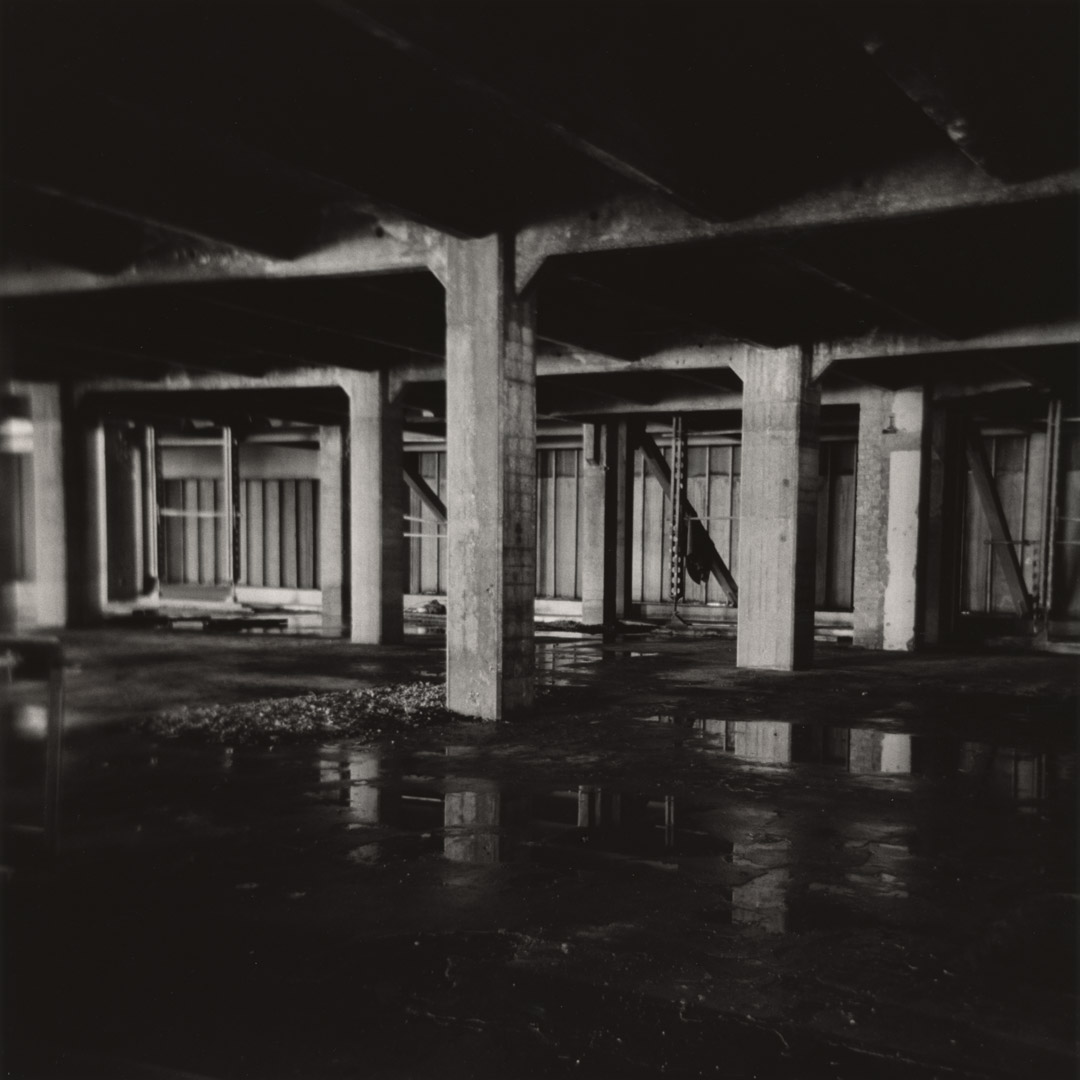
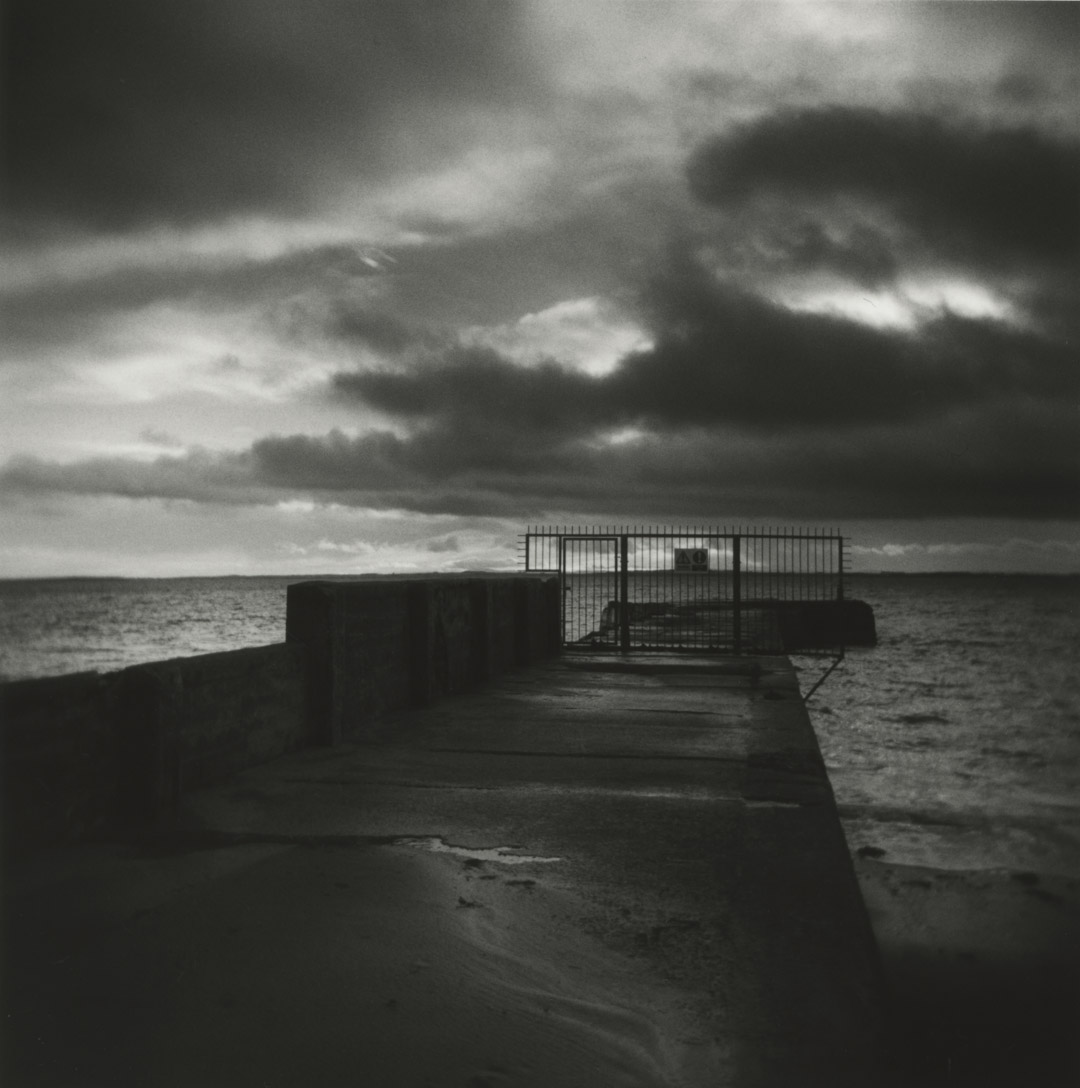
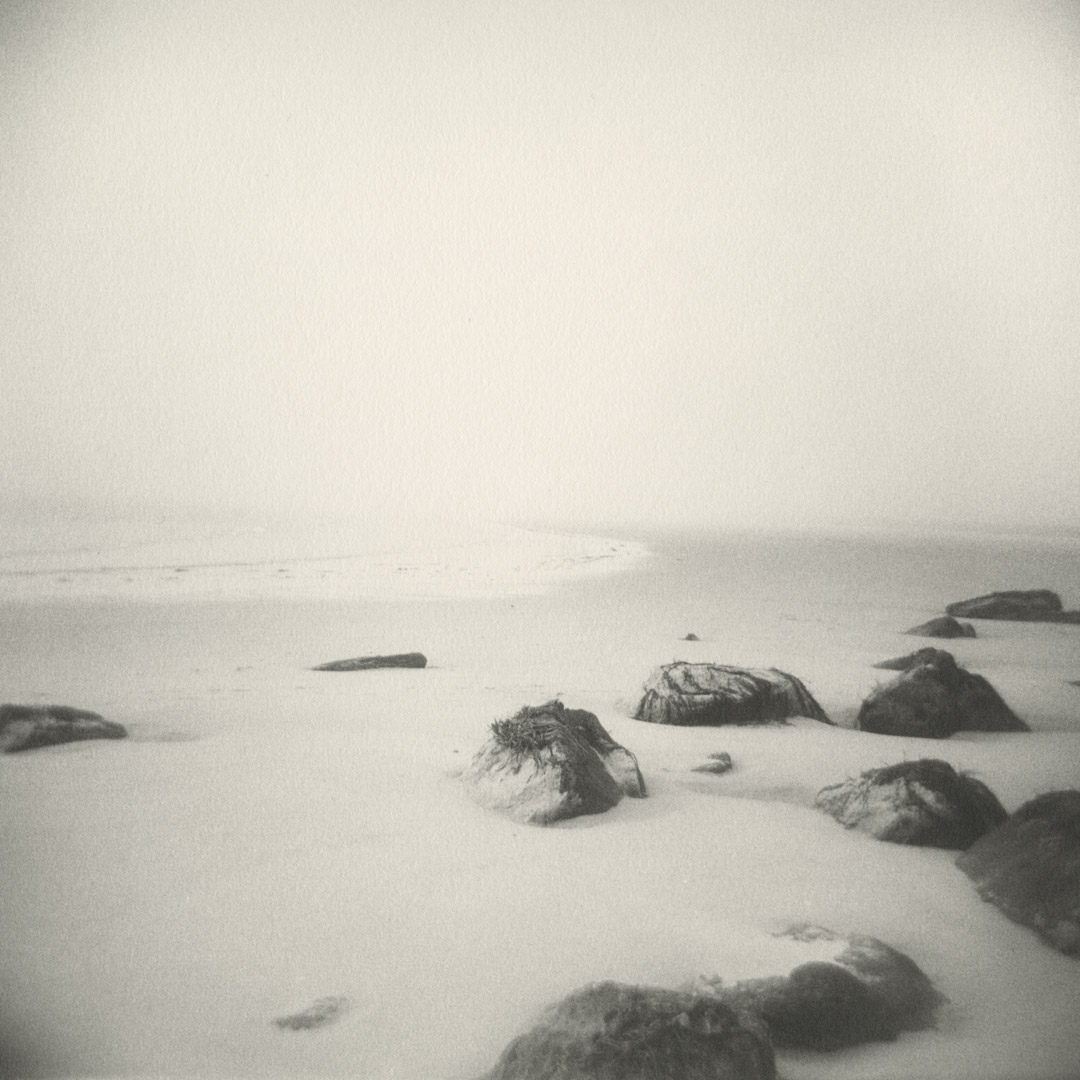
Paper Ghosts is a photography exhibition by Kim Shaw showing at Art Jericho from 27 February to 31 March 2014… and the works in it look stunning! Some sit somewhere between soft pencil drawings, and monochrome watercolours, whilst others evoke a feeling of technical drawings, or studies of urban landscapes.
The exhibition comprises a collection of four series of photographs, you see, and each feels distinctly different, to the extent that it could be an exhibition of work by four different artists, which is interesting given that Shaw shot all of the images on a primitive analogue camera, a Holga made famous (and trendy) by Lomography and the boom in smartphone filters and apps such as Instagram and Hipstamatic.
The Old Vinyl Factory Project is a series of analogue images that gathers together works executed over the past 18 years, and in which the viewer is deserted by an audience that now largely embraces the digital world; Lilliputian Landscapes (2002) play with scale making the macro appear as micro; The Humidity Series sees Shaw explore the wild beauty of fog on Highland beaches and burns, the River Thames and Cherwell, and condensation permeating the hot houses at Kew Gardens, and Pin-hole Flowers is a classically and deconstructed series of images, presented dot by dot. Jenny Blyth, director at Art Jericho commented, “Shaw’s work is quietly beautiful, wistful yet contemporary.”
Shaw is currently a resident artist at Kew Studio, London, but despite coming from a photographically inclined family she started off life studying journalism followed by a career in advertising – perhaps it is this background or the commercial, brief-based photography of her family’s past that enables her to skip from subject to subject, style to style with such ease!?
Here’s a sample of some of the works on display at Art Jericho as part of this exhibition…



… and if this whets your appetite for analogue (which the people of Oxford seem particularly keen on at the moment following on the tail of the pretty popular, even if I do say so myself, Exposed LiveFriday that took place at the Ashmolean in July 2013, and I co-curated with Lomography London) then be sure to check out the forthcoming Oxfordshire Artweeks associated exhibition, Lo-Fi, taking place between 3 and 25 May at O3 Gallery, Gallery at the Old Fire Station and The Jam Factory, which will see aesthetic effect prioritised over digital accuracy in a series of exhibitions and workshops that will explore and celebrate creative analogue photography.
p.s. The Shop at the Old Fire Station sells some Lomo stuff if you fancy getting snappy yourself!
So excited I could pop!
Sensory Mapping
I’ve just submitted my review of Emma Moxey‘s current exhibition, All the Familiar Landmarks, to the Oxford Mail. The review will be in the paper on Thursday, and the exhibition is currently on display in the Gallery at the Old Fire Station until 30 March.
Anyway, I won’t go on about the exhibition now as you can read about it in the paper on Thursday (needless to say that it is damn good and I urge you to go see it); however, in part cap-doffing admiration, and in part confession I’d like to point people in the direction of a really great interview by Samuel Stensland (aka Mr Pint Writing) who interviewed Emma about All the Familiar Landmarks for the OFS blog… you see I’ve nicked some of her descriptions from this interview for my review – really hope that’s ok!?
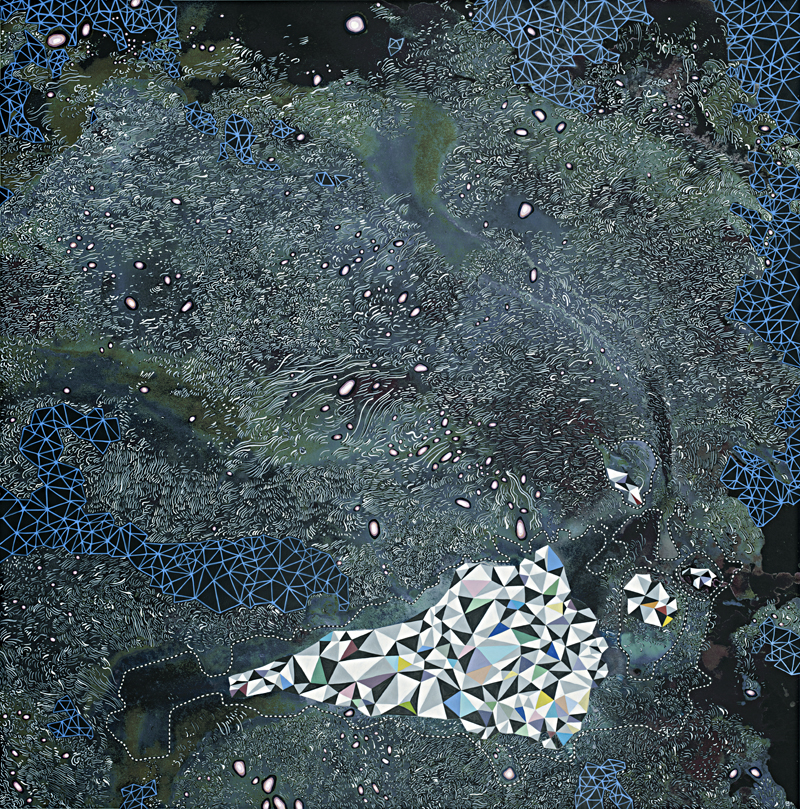
In other news, discovering Emma Moxey’s work, and finding out about a recently established project called Cities & Memory that has been set up to map the real and imagined sounds of the world, I am getting toe-tinglingly excited about the potential to pull together some really brilliant artists all working in a different areas of sensory mapping.
Those artists include (but aren’t limited to):
Emma Moxey
Kate McLean – Sensory Maps
Sarah Mayhew Craddock **ahem**
Stuart Fowkes – Cities and Memory
Victoria Henshaw – Smell and the City
I’m thinking that this could make for a really interesting pan-Oxford project, potentially working in collaboration with Science Oxford, OCM, and Modern Art Oxford (only these organisations don’t know this yet! ). Watch this space!
“Our most precious moments of travel are taken home not through our luggage, not through our cameras… but through our senses.”
Anita Mendiratta, 2010
The space of literature
An exhibition by Lucas Dupin at Oxford Central Library
Continues until Friday 28 February 2014
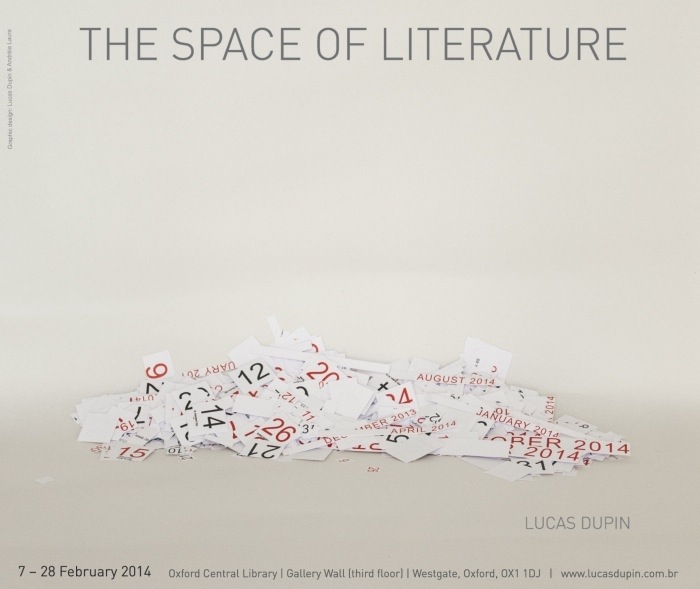
Lucas Dupin (b. 1985) is a Brazilian visual artist with an MA in Fine Art from the School of Fine Arts of the Federal University of Minas Gerais, Brazil, and a BFA from the same University.
Looking at the portfolio pages on Dupin’s website it’s clear to see that he’s an artist with an active interest in creating site-specific interventions in public spaces, both indoor and outdoor, in addition to exhibiting in traditional gallery spaces. Combine this penchant for public engagement with a deep-rooted interest in bookbinding and literature that runs alongside his practice, and it’s not surprising to find that this Brazilian artist has found himself in Oxford with an exhibition at the city’s central library.
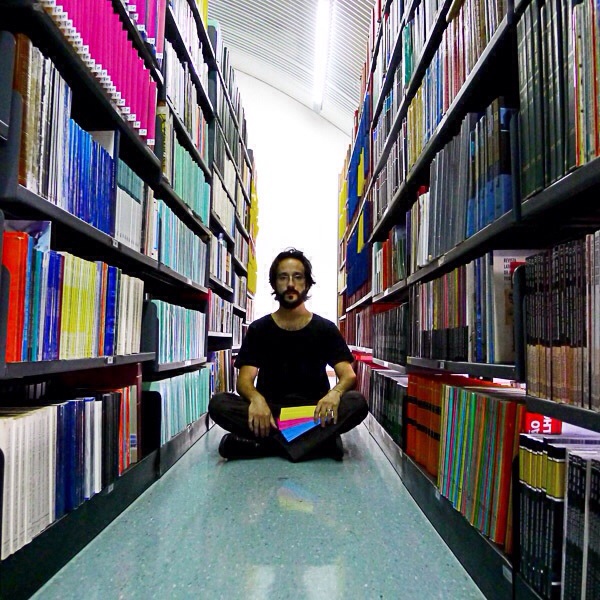
The space of literature comprises two new works, a wall-based installation and a series of watercolours. The work derives its title from a book by the French writer Maurice Blanchot. Despite its connection to the literary practice, Dupin’s artworks invites the viewer to enter into an experience, to explore an understanding of a place where time and space are absent. Dupin is interested in creating transportative experiences that enable the viewer to enter a space where one belongs to the imagination.
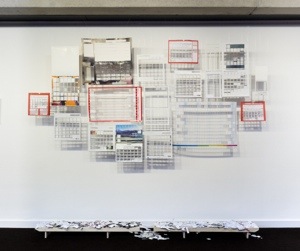
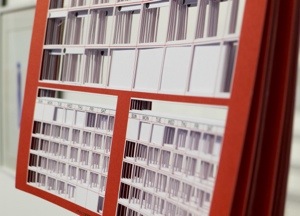
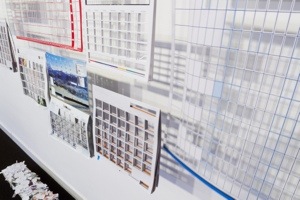
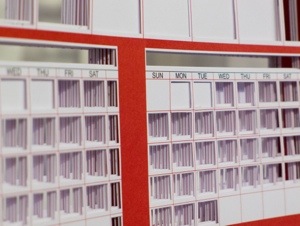
Deconstructing everyday objects, Dupin’s installation at Oxford Central Library comprises of a group of old calendars where all numeric or time references are cut out. What remains, hanging on the wall, is a geometrical patterns of grids, the left over spaces of the days plus the missing parts strewn across the floor.
The other other work is a set of displaced watercolours. The paintings evoke a space of strangeness where time and space seem to be suspended.
Lucas Dupin has worked with bookbinding since 2005, developing books, and teaching courses. In 2009 he won 2nd place in the ABER (Brazilian Association of Bookbinding and Restoration) contest in the amateur category with an exhibition at São Paulo Cultural Center. He also conducted a short internship at Atelier Reliures Houdart in Paris under the guidance of Ana Utsch in 2008.
Dupin’s work has been exhibited and featured in several solo and group exhibitions in Brazil, Canada and USA. Two years ago, he won the Energias da arte Prize, an important national award focused to young artists. As part of the prize he joined an artistic residency at The Banff Centre in Canada for two months. Other highlights in his curriculum are the prizes Forestry Interactions (2010) with an artistic residency at Terra UNA Eco Village and the competition and exhibition Olheiro da arte in Rio de Janeiro.


Hannah Rickards and Roelof Louw at Modern Art Oxford
To enable me to fix my attention on any one of these symbols I was to imagine that I was looking at the colours as I might see them on a moving picture screen.
What prompts someone to go to see an exhibition by an artist who’s unknown to them? Is it the reputation of the curator or the organisation(s) promoting / hosting the exhibition? Is it visual intrigue, perhaps an image, or a poster? Is it a layered decision… appetite whetted as one reads on, and then makes a decision? I guess it probably depends on the individual, and the power of the ‘prompting’ stimulus/stimuli.
I hadn’t heard of Hannah Rickards before, but I was intrigued as I’d met Paul Hobson who’d told me that this insertion into the programme was his doing, and he’d worked with her before. I was surprised by the relatively ‘last minute’ nature of this show by curatorial standards (knowing that so many exhibitions can be about three years in the making). So who is this Hannah Rickards, and why has Hobson so confidently nailed her colours to the Modern Art Oxford mast?
When I saw this ‘promo image’ of Rickards’ work, I was vaguely intrigued, but I wasn’t moved…

Hannah Rickards
However, when I read on the Modern Art Oxford website that Hannah Rickards is drawn to natural phenomena such as birdsong, thunder, mirage and the aurora borealis, which she examines through spatial works that take the form of moving image and sound I realised that there had to be more to this show than two dimensions, more than monochrome lines and text – there had to be colour, sound, movement, physicality of some description, there had to be leaps of imagination… I was intrigued, I was there, and I left sold.
It seems that Hobson and Rickards share common ground in their approach to life, both individuals with one eye on the bigger picture and all that it might entail whilst simultaneously delving deep into the microscopic detail of specific subjects. The Modern Art Oxford website explain that,
“Rickards’ scrupulous and investigative methodology involves the detailed deconstruction of her chosen subject. Breaking sounds or physiological occurrences down into minute parts for individual examination, her intense artistic gaze scrutinises each particle of information from a number of angles before reconstruction and eventual presentation.”
Bringing together Rickards’ important works to date in an interwoven configuration that spans all of the first floor galleries the exhibition is like taking a walk in the countryside in that it’s a personal exploration, the route isn’t dictated, but there are paths and physical markers to negotiate, and what you see and hear will entirely depend on what you’re open to seeing and hearing.
I didn’t find all of the work captivating, but I did find most of the work captivating, and the transporative experience of visiting the exhibition was, in itself, a truly fabulous one – meditative, reflective, a journey of heightened, transitory sensory experiences. If I could have thrown my arms around this show and licked it, I would have done… but it’s just too big; conceptually bursting out beyond the walls, floor and ceiling of the gallery spaces – it’s enormous, a truly immersive experience!
The light changes as one climbs up into the first floor galleries. Rickards has installed coloured gels in the space adding a heightened sense of dynamism to the light and visitor experience. I found myself questioning, doubting my own perceptions as my pace slowed, and I found myself moving cautiously around a room that was behaving in a way that I had never noticed before, yet it didn’t appear to have fallen pray to significant interventions, not to the scale by which I was being moved, anyway. Like land art, but inside.
Rickards comments on this phenomenon of articulating (or not) experience that she explores,
“Everything within this exhibition is to do with an uncertainty in language and how we might try to articulate a relationship to something beyond us in the world: musically, verbally, gesturally.”
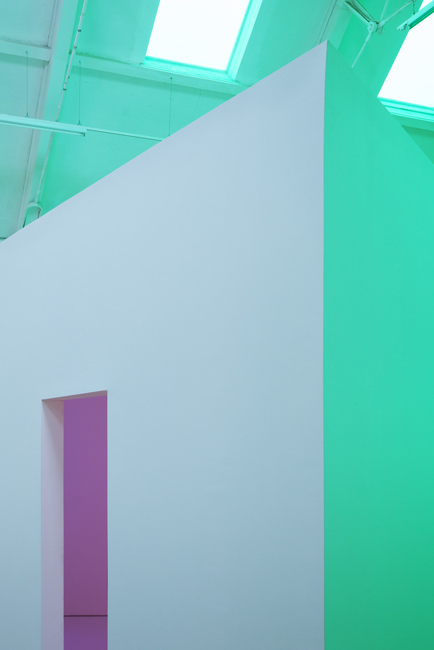
Hannah Rickards – installation shot
Her new work, Right here and then nothing anywhere else. (2014), is a great example of this. Merely a descriptive tick chart. It reminded me of my English Literature teacher at school, Dr Foster. I recalled him discussing imagination and compartmentalisation with us. The way in which adults feel more comfortable (and therefore strive to) pigeon hole, whereas children haven’t developed a system to do this, and as it doesn’t really seem natural, as very few things in life fit neatly in their place, it seems like a ludicrous exercise, yet it’s one that we increasingly find ourselves being asked to conform to through life.
Putting their subjects into sharp focus, each of Rickards’ works breaks down the auditory, visual, or spatial relationships of its subject into minute parts for individual examination. And this amused me, in a giddy way (giddy in the case of Thunder, a musical transcription and performance), the experience becomes so heightened, so intense that it’s thrilling; then one returns to the act of pigeon holing – how can one pigeon hole a sensory experience… or something!?
Visitors will encounter a piece of work with an incredibly long title, The sound I think it makes is, is that whispering sound, to me it sounds, it sounds almost, um, uh, what’s the word I’m thinking? Um, like historic, not historic, but, um, oh: a legend, it sounds like a legend, you know, when you think of a legend or something way back in the past you get that, that, it sounds like that to me, like this legend or somebody’s, this whispering sound: it’s a legend. The work is as much a three-dimensional object, a sculptural intervention and a light prism as it is a three-channel audio and video installation. As alluded to in the title, it can be virtually impossible to eloquently describe an experience sufficiently… it comes easier to poets, yet is the exact opposite to what lawyers do in a world where there is no room for nuance.
Yet, sometimes nuance is everything, you’ve just got to open yourself up to the intangible possibilities of it, and free yourself to wallow in it. This is an exhibition that deserves time, repeat visits in different weather conditions, repeats visits when you’re in a rush, and when you have all the time in the world. And isn’t that the wonderful thing about publicly funded exhibitions in the UK – the efforts of a team of radical gallery staff enable us to make these repeat visits FOR FREE!

Hannah Rickards – installation shot
… and as Modern Art Oxford approaches its 50th anniversary on Pembroke Street, we are reminded that this is exactly what the gallery has been doing for half a century. Step back in time to 1969 when conceptual artist Roelof Louw created his seminal installation Location, a continuous black rubber band stretching horizontally around the four walls of the Upper Gallery at Modern Art Oxford.
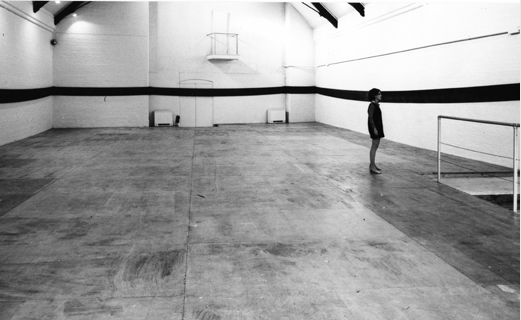
Location by Roelof Louw
The exhibition opened to mixed reviews in ’69. Whilst conceptual art, performance art, and work of this interactive nature was becoming increasingly common-place in major cities in the Western world, it was quite a radical move for a regional art gallery, and apparently not everyone in Oxford was ready for it – hopefully this isn’t still the case!
Yet Louw’s critically acclaimed early work became renowned for its complex relationship between physical space, sculpture and viewer, as seen in Pyramid (Soul City), a carefully constructed pyramid of 6,000 oranges which gradually disappears as visitors help themselves to fruit (go on, take one of your five a day!) re-installed (with fresh oranges) in MAO’s Project Space.
This Roelof Louw archival exhibition was unearthed by PhD student, Hilary Floe, upon the revelation that Hannah Rickards’ work was going to be on show, and the two bodies of work chime perfectly. The Roelof Louw work forms part of a review of the history of exhibitions at Modern Art Oxford that will lead up to the 2016 anniversary.

Me helping myself to one of my five a day
I went to see this exhibition on a cold, grey day feeling a bit miserable, and sorry for myself – I left elated, with a spring in my step, loving life, nature, art, and the fact that this gift is free.
The Hannah Rickards exhibition continues until 20 April 2014
The Roelof Louw exhibition continues until 6 April 2014
 Sarah Frances Mayhew