Voice Blindness

A really good friend of mine just called my mobile from a number I didn’t recognise. Said friend has been out of the country travelling for the last three months, and I wasn’t anticipating the call. He didn’t say who it was when he called in order to ‘surprise me’, but expecting me to recognise his voice, then jokingly (I hope) taking offense when I didn’t and asked him if it was someone else. The someone else I thought it might be was another old, male friend that I rarely hear from. Both friends are about the same age (mid to late 30s), both friends are smokers, both friends are male, both friends are dear to me. One friend is originally from near Glasgow, the other friend is originally from near Middlesbrough, but both friends have been living in the Midlands/South East for most of their adult lives. In short, I knew that I knew the voice, I just couldn’t pin down whose voice it was, not even after he told me his name (I appreciate that this sounds as though I’m a really bad friend, but I’ve known this guy for years and love him like a brother – that’s why it’s flummoxed me!)… and it left me wondering if I knew that I knew it because I recognised it, or if I just thought that I must know it because of the familiar way that I was being spoken to!?

This wasn’t the first time that I haven’t recognised someone’s voice over the phone. I’m a busy person, I get a lot of calls, I’m not always (in fact rarely) thinking about the caller when they call, so I’ve previously stamped my feet and thought it rude, arrogant and presumptuous that people should expect me to know who they are without introducing themselves when they call.

However, this train of thought made me think that perhaps it’s not their problem… it could be mine. Do other people instantly recognise voices over the phone, I wondered? Having quite an acute sense of smell, being an artist, and naturally analytical I find that I have quite hyper-real experiences from time to time, when I really indulge myself in a sensory experience, and I love it.

Though it’s commonly recognised that animals use their senses in different ways to humans in a survival of the fittest in their given environment, evolutionary fashion – moles are blind (or as good as), but they have an incredibly well-developed sense of touch, birds of prey have amazing eye-sight (my Dad’s nickname for me as a child was Hawk Eye) but a poor sense of smell, whilst dogs tend to have a great sense of smell, but have less well-developed hearing etc. My other half is always bemoaning the sound levels that I set the TV at, I claim that I enjoy the cinematic, immersive experience… but is it more that we’re wired in a different way. Is his hearing more finely tuned than mine? Is hearing my weak sense? Well, I don’t think it is, it’s not that I don’t hear things, I do, and I love listening to music. However, I wonder if some people, myself included, might have faulty / lesser developed sonic recognition synapses?

**Cue some Googling**

A paper in the journal Science describes this difficulty in differentiating between voices as voice blindness and goes on to describe how Impaired phonological processing is characteristic of dyslexia and thought to be a basis for difficulty in learning to read. This figures, and from a personal perspective, whilst I have no problems reading and writing now, I did when I was a child (my spelling was atrocious). This would also explain the frustration of a man in a supermarket recently whose first language wasn’t English and hadn’t a clue what I was asking for when I inquired as to where the nuts are (he recognised nuts in a southern accent ‘na(soft a)ts’ but he didn’t recognise my guttural, vowelly ‘nUts’ – getting nowhere I temporarily cast off my upbringing, went received pronunciation on him… and left the supermarket with a packet of peanuts. What I’m getting at, is that there’s no denying that, depending on accent and inflection, the same words can sound incredibly different (take the word garage for example), and English is a difficult language with so many phonetic tricks at play between the written and spoken word… but I digress.

What I was left wondering after this phone conversation is if I over-compensate for my poor phoneme sound library by looking and/or smelling harder; and if, in doing this, I am not exercising my phoneme muscle sufficiently!?

Interestingly, my Mum has a very distinctive voice. Having grown up with it, I’m not entirely sure what it is about it that makes it so distinctly Alma, it’s just ‘Mum’s voice’ but other people tell me, and her, how distinctive it is. To a lesser extent, I too have been told that I have a very distinctive voice, and an extremely distinctive laugh. Mum and I are both frequently told that our voices can be heard above the hubbub of a crowded room. Again, I’m pretty oblivious to this fact, and I think she is too, we just talk…. but we don’t sound particularly similar (I don’t think!). Does my brother have a distinctive voice? Not particularly I don’t think. He has an irritating (in my opinion) habit of morphing his voice according to who he’s talking to – vocal replication – I’m sure he never has any problems finding nuts in a supermarket! Thinking about it now, I wonder what kind of a weird voice my unborn baby might have when it pops out in a couple of months time, or if I’ll even recognise it!

Mum’s been told that she’s tone deaf, I used to tell her that it was her embarrassing singing in church that made me into an atheist (this isn’t the reason – I was just a mean child!), people have since told her that there is no such thing as being tone deaf. Well, it sounds as though there might be, and I wonder if it’s inherited!? There’s a few interesting words on this subject on the BBC World Service website 14minutes 17seconds into one of their Science in Action programmes – details below:

“Dyslexia is usually considered to be a reading disorder, when the brain does not recognise some symbols properly. It can lead to problems with understanding the written world. Now, brand new research in Science magazine shows that dyslexics may also have problems identifying voices. The BBC’s Jennifer Carpenter tells us about the findings.”

In short, it would seem that very little is known about voice blindness or phonagnosia (as it was formally called)… but I reckon I might have it, not badly, but a little bit – at least, that’s what I’m going tell my friend who called earlier!
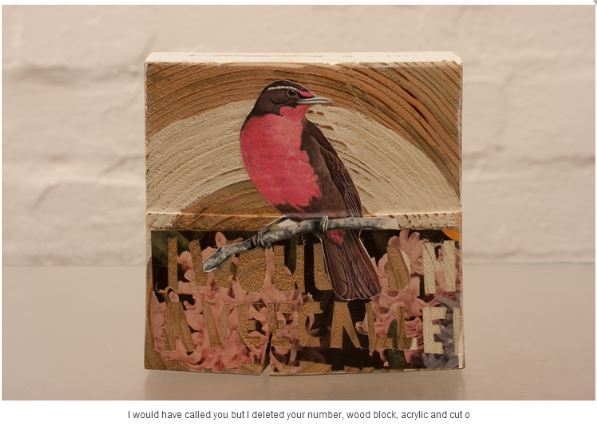
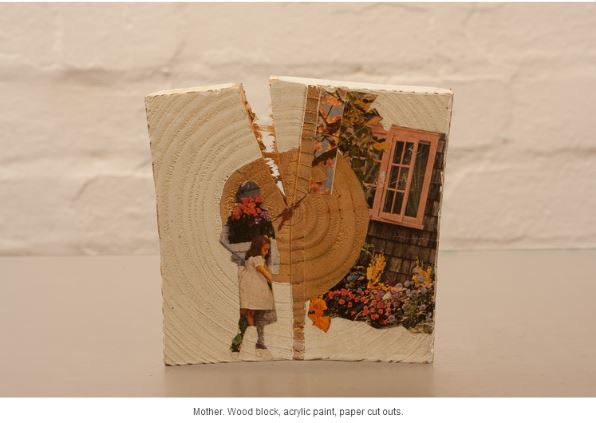
Windows of escape framed by hospital life

I sat next to a man at a symposium the weekend before last who explained that his partner organises exhibitions at the local hospital, the John Radcliffe. Oxford’s a small place, and it immediately clicked that his partner must be Gabriele Dangel from Notfamousyet – I’ve seen stuff that she’s curated before, and I’ve rated it, though I’ve never been up to the hospital to see anything that she’s programmed there.

Contemporary art in hospitals is nothing new these days, but meeting this guy, and thinking about what Gabriele is doing set me thinking about the importance of it, and the need to signpost it well, and take it seriously within the holistic hospital environment. By that, I mean that I found myself (slightly lost, geographically and emotionally) in a hospital chapel in my ‘hour of need’ a couple of years ago… but I’d have been much more appropriately placed in a gallery space.

Anyway, last week I received an email about another exhibition by Claudia Figueiredo and Jonathan Moss this one on South Street at The Churchill Hospital, Oxford. The exhibition, Windows of escape framed by hospital life, continues until Saturday 8th March 2014. I’m probably going to find myself in hospital as a patient in a couple of months time, and as such, just wanted to say thank you to those that exhibit and coordinate quality contemporary art in hospitals. I reckon I’m soon going to really appreciate something that, as a healthy member of the public, I’ve previously overlooked.

Claudia Figueiredo Claudia - Mother

The history of the Oxford Canal

The below information has been swiped from the hugely informative Canal River Trust website where you’ll find a whole host of other interesting canally stuff including competitions and tips on days out aboard a canal boat.

The Oxford Canal is amongst the earliest of cuts in the Canal Age. It was initially designed by James Brindley, succeeded by Samuel Simcock and Robert Whitworth after Brindley’s untimely death in 1772 at the age of 56.

It was opened in sections between 1774 and 1790 with the purpose of bringing coal from the Coventry coalfields to Oxford and the River Thames. The canal formed part of Brindley’s grand plan for a waterway ‘cross’ linking the rivers Thames, Mersey, Trent and Severn.

The Oxford Canal provided a direct link with London via the Thames, and for several years was hugely profitable. The arrival of the Grand Junction Canal, linking Braunston to London and later becoming the backbone of the Grand Union Canal, finally broke its stranglehold and effectively bypassed the southern half of the Oxford Canal.

Nonetheless, it brought more traffic to the northern section, which soon required upgrading. The Oxford Canal was originally built to the contour method favoured by Brindley, which not only meant that the level remained fairly constant, but that the canal could call at many villages and wharves along the route. The drawback to this approach was lengthy transit times.

Boating at Braunston

In the 1830s, Marc Brunel and William Cubitt made the most of developments in engineering to straighten Brindley’s original line. Several of the resulting ‘loops’, where the new line bisected the old, can still be seen: some have found use as tranquil moorings. Other improvements included the duplication of locks at Hillmorton, and widening on the stretch between Napton and Braunston, where the canal shares its route with the modern-day Grand Union.

But the southern section between Napton and Oxford remains remarkably unspoilt and offers an evocative insight into canal life as it would have been two centuries ago. Trade began to seriously decline on the Oxford after World War II, but commerce continued well into the 1960s.

Tooley’s Boatyard, in Banbury, is famous as the spot from where canal pioneer Tom Rolt set out on his 1930s journey around the waterways. His travels in Cressy were immortalised in the book Narrow Boat, which directly led to the formation of the Inland Waterways Association and the campaign to save the waterways. The boatyard has recently been reborn as the centrepiece of the Castle Quays shopping development.

The historic Oxford terminus of the canal is long lost, sold to Nuffield College and redeveloped as a public car park. However, support is growing for proposals to reinstate it as the heart of a new cultural quarter for the city.

…………

What I need to do now, is figure out which points along the canal I’m going to collect water from. I’d like to have about 20 points to choose from, some of them recently renovated, others as old as they get. Some fast-flowing, others as stagnant as possible – please email me with any suggestions (sarah@sarahmayhewcraddock.com)

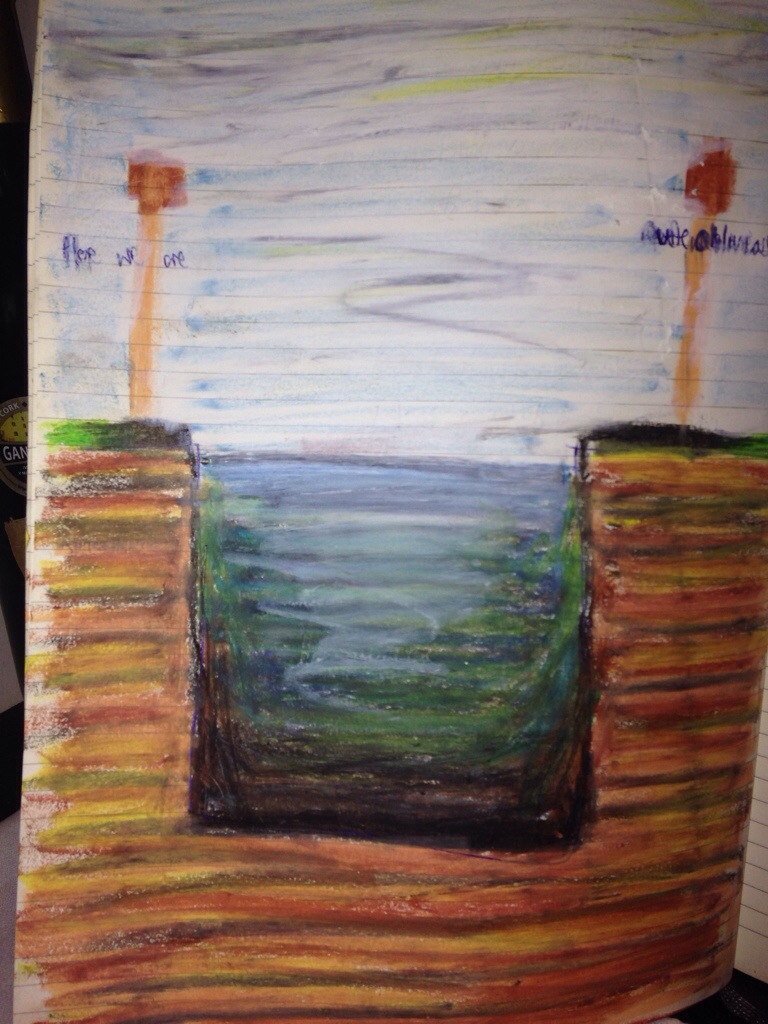
Here we are. Quite oblivious.

Here we are. Quite oblivious. is a very quick (and quite ugly) sketch that I did in an attempt to pare back my concept for Wait ’til it Settles to a 2-d form. This work shares resonances with my installation The Natural Course of Things, in that it’s about one’s consciousness (or lack thereof) of the various different layers of human existence, and the way in which nature can intervene to mask or reveal or dictate direction.

20140204-161319.jpg

Sacred water

It’s 3rd Feb… and the water keeps on coming. All waterways are swollen to bursting, and dangerous, almost across the entire country, and more flood warnings have been issued today in Oxford. It’s incredible, just incredible. Figures show that parts of England have had their wettest January since records began more than 100 years ago.

Anyway, this is making me think about water in a different way. Ordinarily carefully preserved and measured, weather reports are showing polluted, overflowing excesses of water. Wildlife conservation is one of the things being blamed for water channels not having been sufficiently dredged over the past few years, and consequently unable to channel the quantities of water properly.

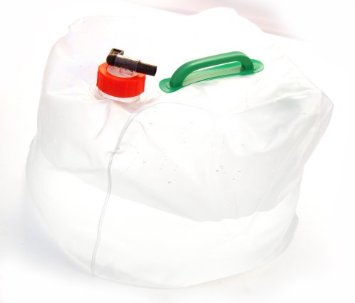
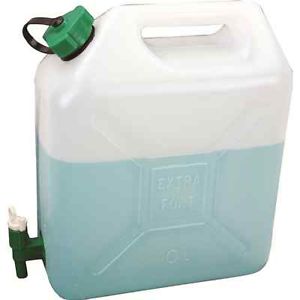
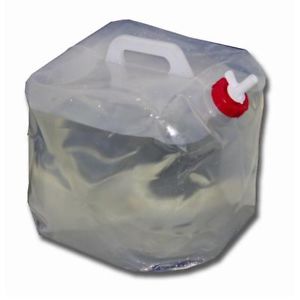
I’ve been thinking about water butts, and containers – vessels that we usually use to capture and contain ‘good’ water. My thoughts have turned to preserving this ‘bad’ water, and the various layers of history that it’s churning up in something that viewers might be able to relate to on a domestic level. I like the thought of the physicality of the selection below that I’ve found online, and that I’m considering using for my Wait ’til it Settles installation that’ll form part of the Inspired by the canal exhibition at the Jam Factory. I like the idea that, with some effort, they’re portable, so people might move them around in a restaurant environment, unsettling the waters. And I like the thought that, in the event of an emergency, one might wait til the muddy waters settle and then syphon the clean water off the top – ignoring the history, the old, settled murky water, and hoping for the best for the future.

Domestic water vessels 20 Litre Portable Collapsible Water Container with Tap Highlander 10L Litre Capacity Plastic Jerry Can Camping Water Container With Tap HIGHLANDER COLLAPSIBLE 20 LITRE WATER CONTAINER CAMPING

Whatever containers are used in the end, I’d like them to be as transparent as possible so visitors can see what’s within (exposing the interior of a canal – laying it bare); and I’d like them to be mainly different in shape and form, just as the water within them will be taken from different parts of the Oxford canal.