Windows of escape framed by hospital life

I sat next to a man at a symposium the weekend before last who explained that his partner organises exhibitions at the local hospital, the John Radcliffe. Oxford’s a small place, and it immediately clicked that his partner must be Gabriele Dangel from Notfamousyet – I’ve seen stuff that she’s curated before, and I’ve rated it, though I’ve never been up to the hospital to see anything that she’s programmed there.

Contemporary art in hospitals is nothing new these days, but meeting this guy, and thinking about what Gabriele is doing set me thinking about the importance of it, and the need to signpost it well, and take it seriously within the holistic hospital environment. By that, I mean that I found myself (slightly lost, geographically and emotionally) in a hospital chapel in my ‘hour of need’ a couple of years ago… but I’d have been much more appropriately placed in a gallery space.

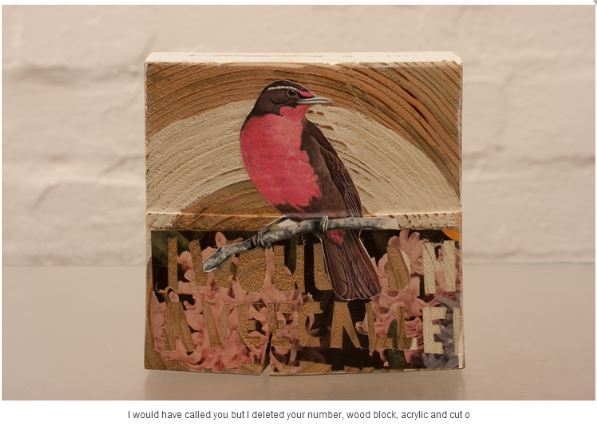
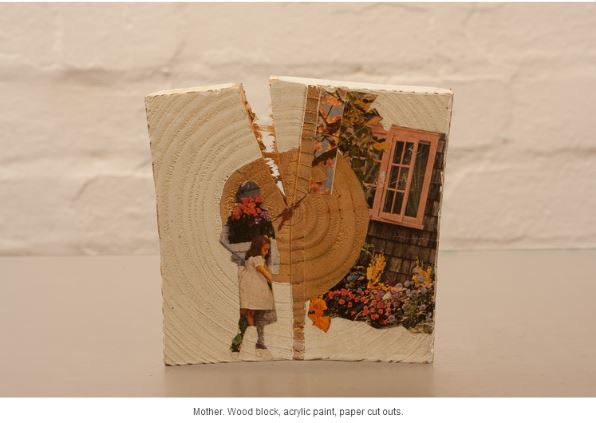
Anyway, last week I received an email about another exhibition by Claudia Figueiredo and Jonathan Moss this one on South Street at The Churchill Hospital, Oxford. The exhibition, Windows of escape framed by hospital life, continues until Saturday 8th March 2014. I’m probably going to find myself in hospital as a patient in a couple of months time, and as such, just wanted to say thank you to those that exhibit and coordinate quality contemporary art in hospitals. I reckon I’m soon going to really appreciate something that, as a healthy member of the public, I’ve previously overlooked.

Claudia Figueiredo Claudia - Mother

Sacred water

It’s 3rd Feb… and the water keeps on coming. All waterways are swollen to bursting, and dangerous, almost across the entire country, and more flood warnings have been issued today in Oxford. It’s incredible, just incredible. Figures show that parts of England have had their wettest January since records began more than 100 years ago.

Anyway, this is making me think about water in a different way. Ordinarily carefully preserved and measured, weather reports are showing polluted, overflowing excesses of water. Wildlife conservation is one of the things being blamed for water channels not having been sufficiently dredged over the past few years, and consequently unable to channel the quantities of water properly.

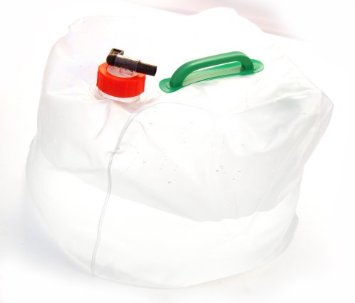
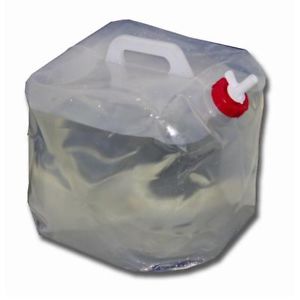
I’ve been thinking about water butts, and containers – vessels that we usually use to capture and contain ‘good’ water. My thoughts have turned to preserving this ‘bad’ water, and the various layers of history that it’s churning up in something that viewers might be able to relate to on a domestic level. I like the thought of the physicality of the selection below that I’ve found online, and that I’m considering using for my Wait ’til it Settles installation that’ll form part of the Inspired by the canal exhibition at the Jam Factory. I like the idea that, with some effort, they’re portable, so people might move them around in a restaurant environment, unsettling the waters. And I like the thought that, in the event of an emergency, one might wait til the muddy waters settle and then syphon the clean water off the top – ignoring the history, the old, settled murky water, and hoping for the best for the future.

Domestic water vessels 20 Litre Portable Collapsible Water Container with Tap Highlander 10L Litre Capacity Plastic Jerry Can Camping Water Container With Tap HIGHLANDER COLLAPSIBLE 20 LITRE WATER CONTAINER CAMPING

Whatever containers are used in the end, I’d like them to be as transparent as possible so visitors can see what’s within (exposing the interior of a canal – laying it bare); and I’d like them to be mainly different in shape and form, just as the water within them will be taken from different parts of the Oxford canal.

All about the rich kids…

I hadn’t realised quite how timely and topical my rant, Painting a sobering picture. What does the future hold for art education, art schools, and artists in the UK?, was until I read this article in The Guardian by Sean O’Hagan yesterday,

A working-class hero is something to be … but not in Britain’s posh culture.

“British culture was once open to ‘messy kids’ from secondary moderns. But if you want to make it in 21st century Britain, you’d best have a cut-glass accent and public school pedigree.”

Difficult to feel optimistic. Just hope and pray (not entirely sure who to) that there are politicians out there ready to reform before it’s too late, and the arts are, once again, the exclusive, unbalanced, elitist (and skewed with it), domain of the signet ring brigade. Let’s not allow the hard work of the last few generations to be unpicked. Let’s aspire to equal opportunities, that’s what makes Britain rich in the long run. The arts must be accessible to all, on every level. Just look to the opening ceremony of the 2012 Olympic games to see why – the arts are an intrinsic part of our make-up in the UK, and they’re such an enormous part of what makes Britain Great.

Jack Eden – Axis at the Old Fire Station, Oxford

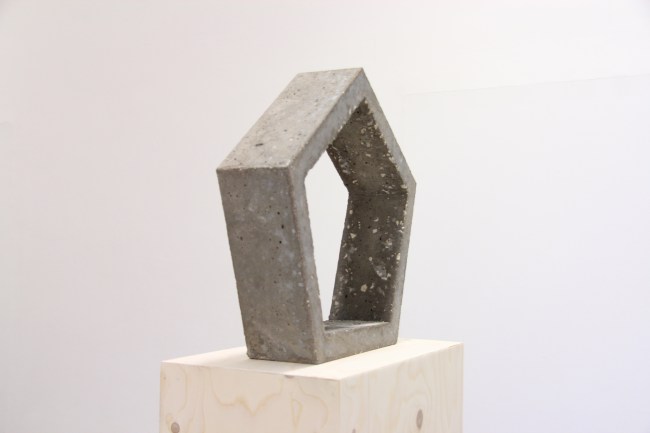
Oxford-based sculptor, Jack Eden, is at it again. Last March he exhibited at the little known (but quite wonderful) Turrill Sculpture Garden in Summertown (curiously located at the back of the library on South Parade). I wrote about his show there, but it didn’t get printed – see below).

Anyway, I’m writing this as he’s good, really good, and exhibiting again, this time an indoor exhibition, in the gallery at the Old Fire Station. The below work is called Imperfection Perfected. I haven’t seen the new work that he’s made for his current exhibition yet, but here’s a link to Jack’s blog with more info about the show, Axis, which continues until the 15th Feb – Jack’s Valentine’s gift to you! Get thee there!
Image

Aperture by Jack Eden at the Turill Sculpture Garden

Early career artist, Jack Eden, encourages visitors to read between the lines, and take the time to see the world through someone else’s eyes in his exhibition of new works in the Turill Sculpture Garden in Summertown.

Situated off South Parade, behind the rows of dusty books in the Public Library, is a 100ft by 60ft walled garden. Twelve years ago local artist and curator Katherine Shock approached Oxfordshire County Council and proposed that the then empty, overgrown and uninviting space be transformed into an attractive garden for both library users and the general public to view temporary sculpture exhibitions by contemporary artists, or simply sit and soak up the peace of the tranquil setting. Since opening to the public the Turill Sculpture Garden has become increasingly ambitious in it’s programming, as evidenced in the current exhibition, Aperture, by Jack Eden that continues until Saturday 27th April 2013.

Aperture, Eden’s exhibition of elegant, white monoliths, is a new series of sculptures designed to draw focus to existing spaces, framing and magnifying the reality that the viewer sees through them. Unusually, it is the word through that is key in this sentence, as Eden presents the viewer with a series of works planted in flowerbeds and amongst shrubbery. Importantly, it is not the white, positive space that Eden is asking us to view, but the changing nature of the negative space, the viewfinder.

Giving a whole new meaning to through the looking glass Eden discreetly, and repeatedly presents the viewer with a comfortably familiar shape. Each ratio that the artist presents is 1.5:1; which, for those in the know, is derived from the 6 x 4” width to height ratio found in photography. However, the silent simplicity of the sculptures belies this mathematic precision. This work isn’t part of the trend for two-dimensional, geometric pop art (by which I mean populist, and slightly flakey with it – lacking conceptual substance, as opposed to Pop Art).

Jack Eden’s work focuses on the interplay between sculptural material and form, and how one affects the other physically, aesthetically, and conceptually, and there is a tangible physicality to the dimensions of the sculptures themselves that stand, as individuals, eyes (or eye) wide open, inviting the viewer to take a look through the aperture and find one’s own image. This open invitation invites a heightened sensitivity to the surroundings, making it particularly intriguing revising the works in different weather conditions, reviewing the world each time from a different perspective as nature dictates what one sees, again highlighting perception as an intrinsic element of the work; after all, this is sculpture, not photography, and as such one experiences so much more than a still image, but a very real experience.

Resonating with the work of the late great English sculptor Barbara Hepworth, and the contemporary American installation artist James Turrell, Eden’s work opens up a dialogue between photography, mathematics, and nature. Katherine Shock, Curator at the Turill Sculpture Garden expanded on this commenting on how Eden arrived at the dimensions of the individual sculptures,

“Aperture and image are governed by equations and formulae, which likewise rationalise and simplify the differing heights and widths of the sculptures.”

In the 1960s James Turrell introduced an art that was not an object but an experience in perception, and just as Turrell manipulates light rather than paint or sculptural material, so Eden manipulates views and focuses the viewer’s attention on something greater than the sum of the sculpture’s parts.

Aperture relies on the unique perspective of the viewer, creating a shared, yet very personal experience. For some visitors to this exhibition the works will frame the garden’s tranquil beauty, the Buddleia, the Portuguese laurel, or the ivy climbing up an ancient wall, for others the experience might be much more philosophical and reflective, whilst others may simply enjoy the positive space, the canvas, the way that the man-made objects contrast so starkly with their environment, and the play of light upon the even surfaces… and that’s what makes these works great, and prompted me to return to this exhibition for a second look – I encourage you to do the same.
Still Life Drawing at the Pitt Rivers Museum

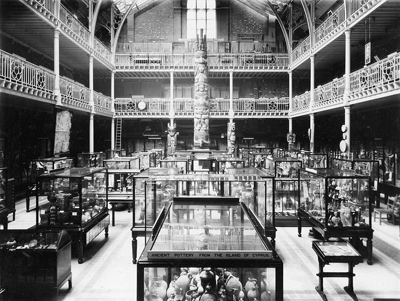
My friend, ol’ studio chum, the super talented, uber friendly, down-to-earth, and painstakingly observant Cath Watson has created an opportunity for people to see beyond the curio in the museum cabinet and join a glass-free drawing group at the Pitt Rivers.

Pitt Rivers b and w

The sessions will be untutored but Cath will be on-hand to guide and make sure no-one gets up to no good with the objects from Pitt Rivers Museum’s Founding Collection (donated by General Pitt-Rivers in 1884!). Read more and reserve your space here.

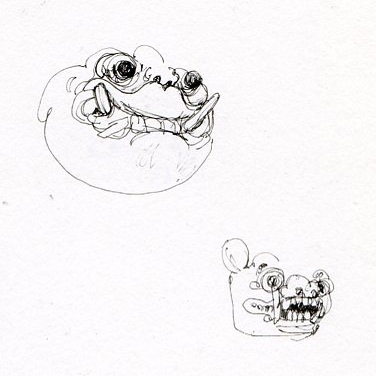
Cath can draw!

And what’s more… drawing group participants will be invited to submit their drawings to the upcoming ‘Makers Month’ event in the Gallery at the Old Fire Station, taking place in April 2014. Cath explains,
“Part of a series of events, each focusing on a different kind of making, April’s event is given over to anything that can be contained on two dimensions, from drawing to painting to photography.”

p.s. Catch Cath (and/or her work) tonight at The Missing Bean coffee shop on Turl Street, Oxford at the opening of her exhibition, A Catalogue of Uncertainty, a collaboration with Seb Thomas – 7.30pm kick-off (not sure how long the exhibition’s on for).